


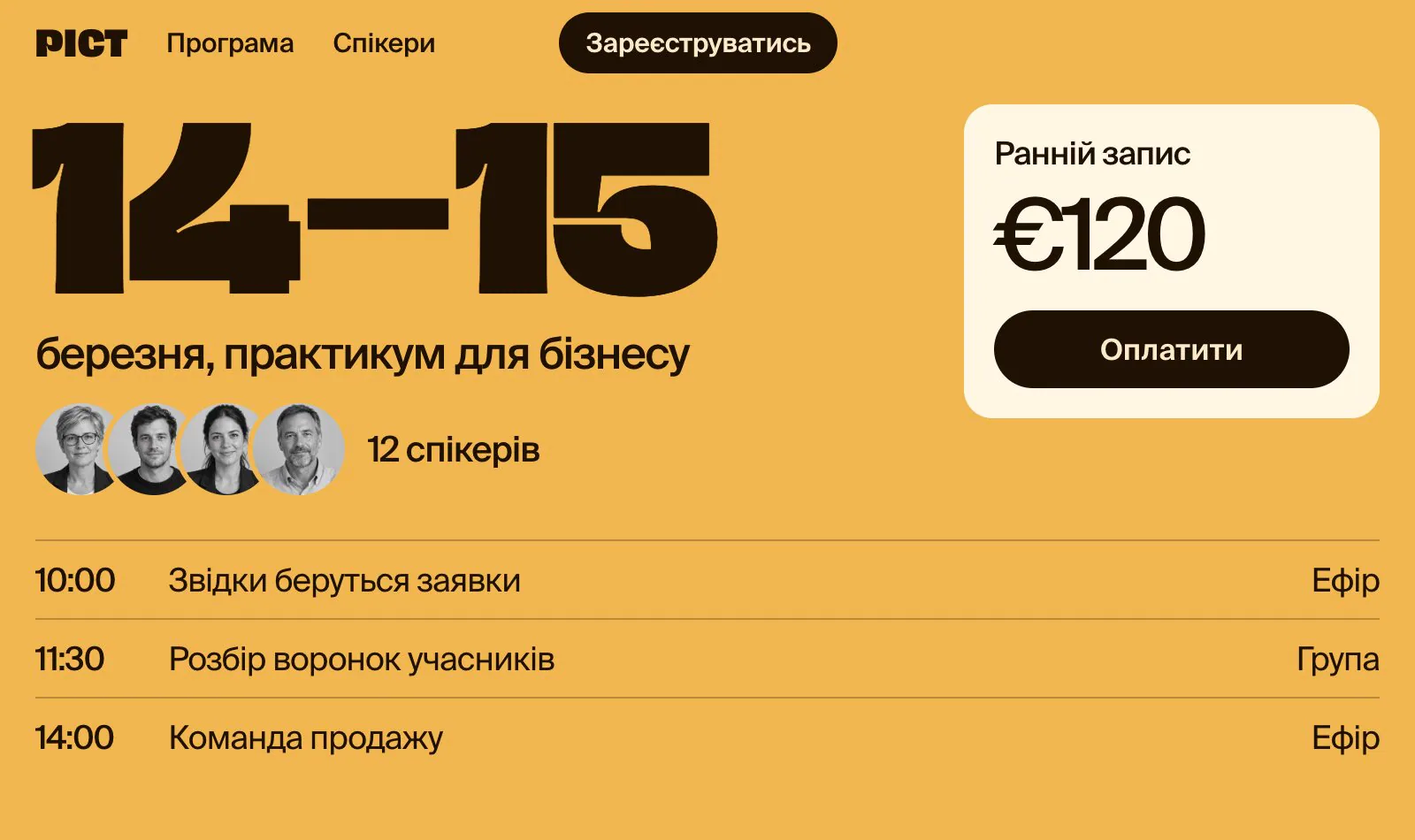
Event and online course websites for launches that have outgrown platforms and spreadsheets
An event or course page, registration, card payment or an invoice, and a participant or student account. We put the launch date in the contract, and you sell the recordings as a course on the same site
What we’ve launched
On a call, we’ll show you one of the projects from the inside: the admin panel and the path a lead takes to the manager.
B2B branded merch store
- Design from catalog to checkout, and we handle development too
- Manager wishlists by company, with a PDF and a link for the client
- Branding cost estimate via a quiz
Website for a packaging print shop with its own production
- Catalog by product type
- A separate section for agencies and artwork requirements
What’s included in an event or course website
The basics come with every site, and you add the rest for this launch now or before the next one. The planning stage is paid separately, and the prototype, site map and plan stay with you even if you continue with someone else
-
Always included9 items
- Launch reviewWe look at how you gather people and money today: forms, spreadsheets, chats, payment reconciliation. We plan the stages backward from the event date or cohort start
- Map and prototypeA person’s path from the link to payment and what they see afterward: gray blocks you can click through on a phone. We refine them before design starts
- Spec, price and dateWhat we do, what we don’t and by what day. The launch date goes into the contract, and the price doesn’t go up after signing
- DesignA concept and the key pages: home, program or course, registration, account. Every stage ends with a working version you see and accept
- Event or course pageDate, program, speakers or author, price and FAQ. You change the program yourself, and the change goes live right away
- Registration and paymentA short form and an instant confirmation email. Webinars and courses are paid by card; for an in-person event the button leads to a ticketing service. Other questions come after registration. You set ticket tiers and the cap in the admin panel
- Participant or student accountEmail login: what’s paid, the program or lessons. Materials unlock after payment, and you no longer send links by hand
- Admin panel: participantsWho registered, who paid, export to a spreadsheet and a Telegram message for every payment. Instructions for every section
- Server, launch and analyticsServer, domain and email, Google setup, checks on phones and in browsers. You see where paying participants came from
Code and access stay with you after any stage
What we build on: WordPress or Laravel, analytics on our server
-
Next launch without a new site
AddYou set up a new conference or cohort as a copy of the previous one: the program, tiers and emails are already in place. The past one stays in the archive, and your contact base feeds the next one
-
Event pages without a designer
AddYou build a new page for an event, cohort or single day in the admin panel from ready-made blocks: program, speakers, tiers, FAQ
-
Date-based pricing
AddEarly bird closes on its own on the set day, and the price changes on the site, in the form and in the emails
-
Group registration and company invoices
AddA company representative registers several people in one list and gets a PDF invoice. The bank marks the payment, and each participant gets their own email
-
One database for every launch
AddEmail addresses from forms and payments go into your email service on their own. You open a new cohort with an email to people who’ve attended before, not with ads
-
Server ready for a rush
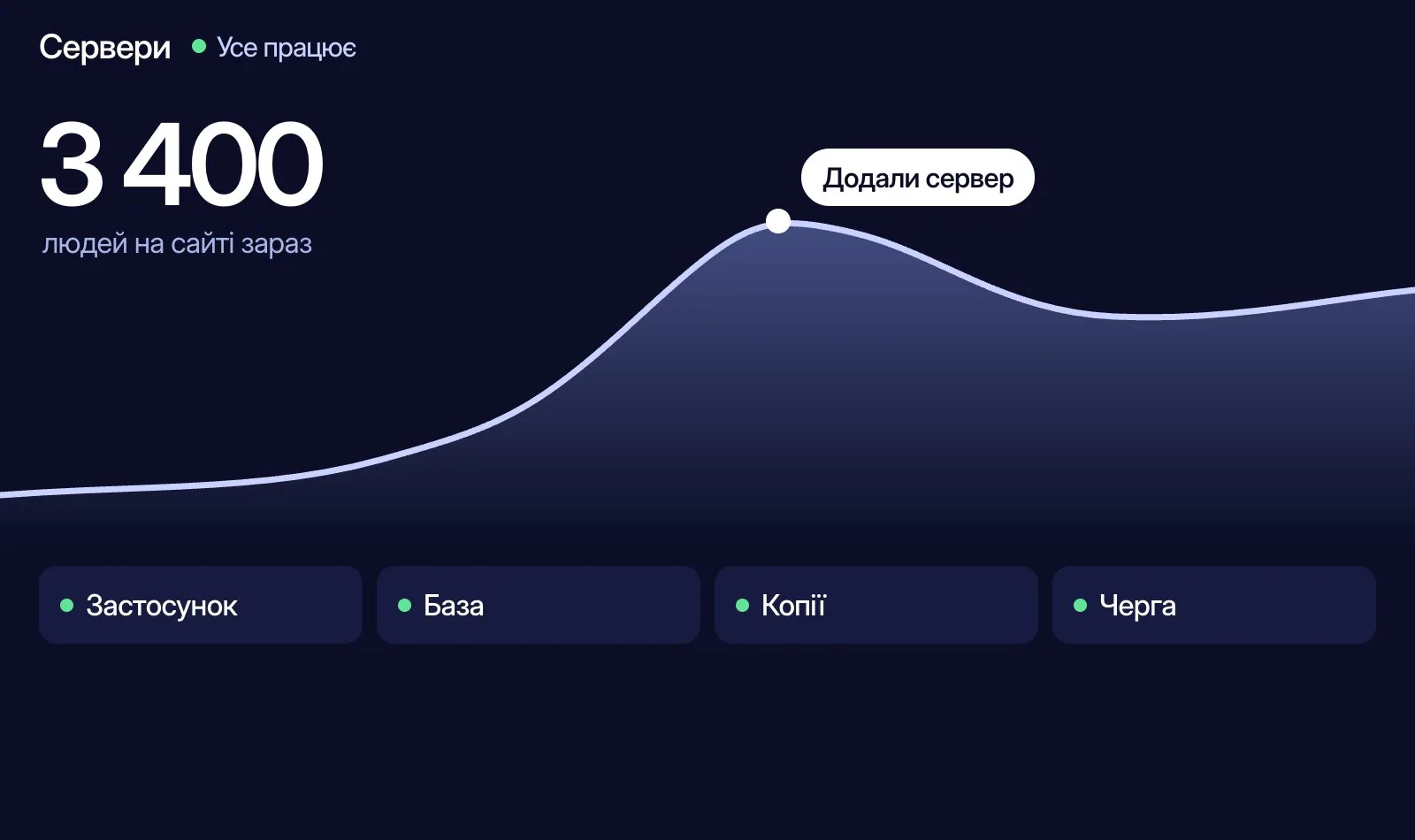
AddBefore registration opens and before the final week, we test how many people the site can handle and give the server headroom for the peak. Servers are fully managed under a separate service
-
Tickets via a service
AddThe button on the event page leads to a ticketing service: sales and check-in stay there, and the clicks show up in analytics
-
Recordings become a course
AddParticipants see the talk recordings in their account. Those who couldn’t come buy them separately, and you build a course from the recordings on the same site
-
Course with locked lessons
AddA course page with card payment: right after paying, the student sees the lessons in their account, and you don’t have to send links by hand
-
Scheduled cohorts and lessons
AddEach cohort starts on its own date, and lessons unlock on schedule
-
Installment payments
AddTwo or three scheduled payments: the link for the next one arrives on its own, and the next module unlocks after payment
-
Refunds and ticket transfers
AddYou set the refund terms yourself, and a participant can pass their spot to a colleague without emailing the organizer
-
Payment, receipt and CRM
AddCard payment, a receipt for the participant and a lead in your CRM, no manual copying
Payment
 LiqPay
 WayForPay
 monobank
 Stripe
 PayPal
 Portmone
CRM and receipts
 KeyCRM
 NetHunt
 Checkbox
-
-
More in the calculator
Scheduled emails, a waitlist, promo codes, live streams, speaker applications, homework with a tutor, numbered certificates
Items you can add
Price it in the calculator



Why your own site when there’s a platform
A platform is cheaper as long as its rules are enough, and then we’ll tell you so. You need your own site when the rules are yours: a company pays by invoice, the price depends on the date or membership, a student hands in work to a tutor. Then every registration comes with its source, and one database serves every launch

- Your rulesCompany invoices, date-based or member pricing, tutors and cohorts. Whatever doesn’t fit a platform’s settings, we design around your process
- Money goes straight to youWebinars and courses are paid into your account through your payment provider. It takes its cut, and there’s no platform fee
- One database for every launchEveryone who came to a past event or finished a course stays with you: you start the next cohort with an email to people who already know you
- You see what workedEvery registration and payment comes with its source: before the next launch you already know where to invest
How much it costs
and what you pay for
These are prices for typical projects; we put the exact amount for yours in the estimate. It goes into the contract and doesn’t go up after signing.
Conference website with a program, registration and tickets via a service

The price changes if you add course lessons, date-based pricing or check-in at the entrance
Conference page with registration and tickets via a service

The price changes if you add a program with speakers, a participant account or company invoices
Webinar landing page with registration and email campaigns

The price changes if you add paid participation, a stream on a private page or a second language
Course website with locked lessons and access after payment

The price changes if you add course tiers, scheduled cohorts or installment payments
Custom LMS setup for employee training
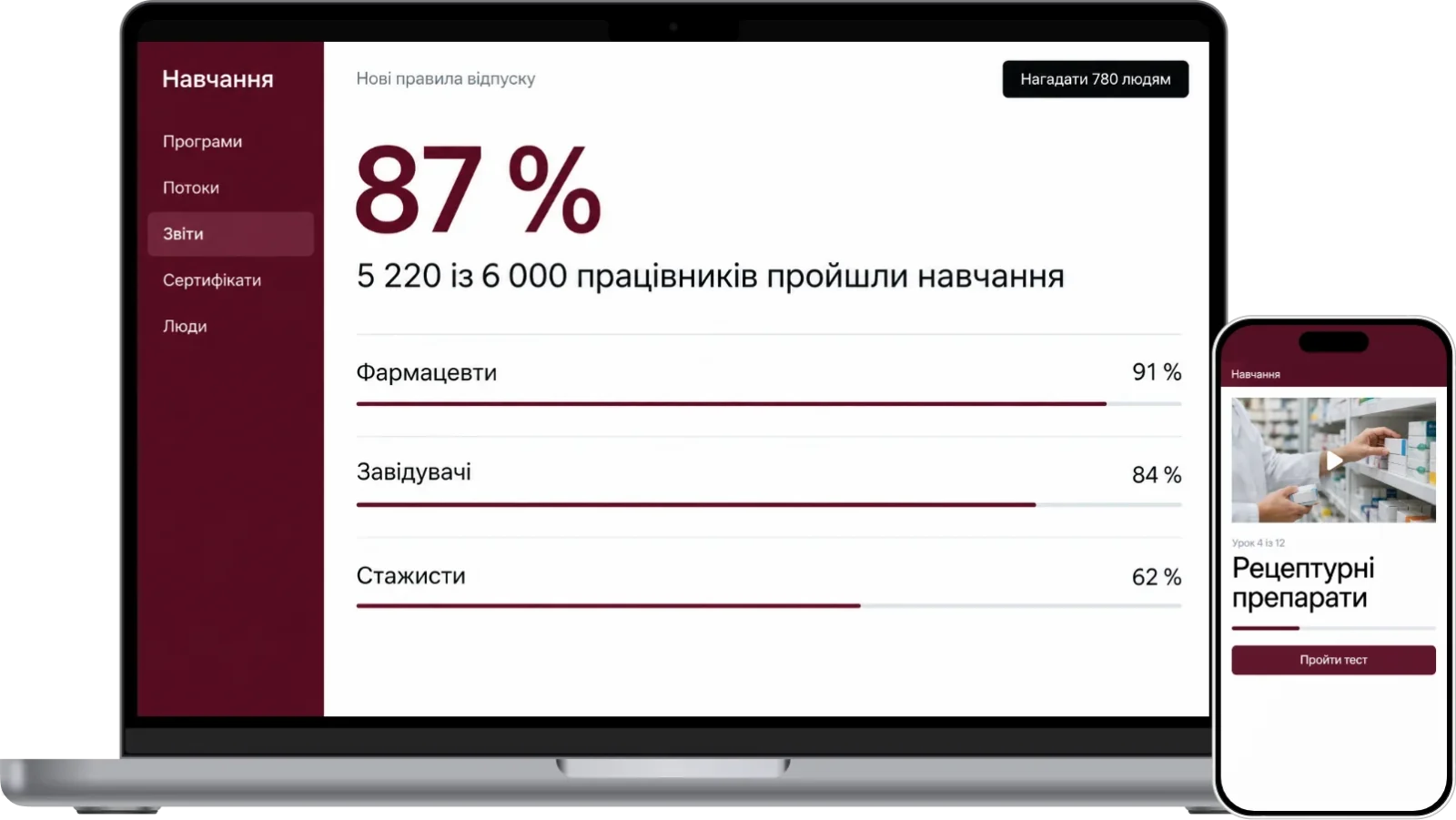
The price changes if you add roles, another language or integration with other systems
- Review, spec and prototype$880
- 4 page types with design$2 000
- Event page, program, registration and tickets via a service$3 050
- Login and members-only materials for participants$800
- Second language$540
- Admin panel, leads in Telegram and launch$1 480
- Project management$900
- Review, spec and prototype$560
- Design concept and utility pages$650
- Event page, registration and tickets via a service$1 500
- Admin panel, leads in Telegram and launch$1 360
- Project management$400
- Review, spec and prototype$560
- Ad landing page with design$1 100
- Email campaigns and leads in Telegram$550
- Admin panel, ad pixels and launch$1 410
- Project management$350
- Review, spec and prototype$800
- 4 page types with design$2 000
- Course page, lessons, access and payment$2 150
- Login and members-only materials for students$800
- Second language$500
- Admin panel, leads in Telegram and launch$1 450
- Project management$750
- Process review, spec and prototype$1 080
- Design concept and utility pages$650
- Lessons, tests, certificates, cohorts and homework$3 400
- Login, three roles and change log$2 200
- Excel reports and a second language$1 040
- Admin panel, team training and launch$1 030
- Project management$950
- You pay by stageEach stage ends with a working version you accept. You pay for the first ones one at a time, then once a month
- The price doesn’t go upAnything new mid-project is estimated separately and done only with your approval
- The date is in the contractWe write down in advance what we need from you and by what day
- Everything stays with youCode, design files, domain and access, even if you move to another team
Know what you need? Build the price yourself
Pick a format and add work items: program, registration, company invoices, participant account, language versions. The total grows with each one, and you send us the finished list to double-check.
Open the calculatorWe don’t just build websites, we engineer solutions
You talk directly to the people who design and build your website, with no middlemen. We genuinely want to understand how your business works: we ask a lot of questions, but in the end the site works the way you do
 Artem SekarevProject, product, and DevOps
Gets to the bottom of your task, plans the work, and leads the project to launch. Runs the servers and is the first to reply to you on Telegram
 Vladyslav TyminskyiProduct, design, and development
9 years in UX/UI. Thinks through the pages and your customer’s path to becoming a lead, creates the design, and builds the website in code himself
Team in your chat
You write directly to the people who design and build your website, from the first message through launch and beyond. The plan, the hours report, and the invoice arrive in the same chat
-
Departments in the chat
Design, development, and DevOps message you themselves, as if from the office next door
-
Work in stages
A plan in the chat every Monday, and each stage ends with a working version that you sign off on
-
Task board
You see what’s done, what’s in progress, and what’s next
-
Hours at set rates
Every hour is in the tracker: design $15, development $20, DevOps $25
-
Report on the 1st
Where the hours went, and the invoice for them, in the same chat
-
After launch
You or your managers add tasks in the support plugin, and we estimate them before starting



What the people we launched with say
The same companies as in the work above. Each review links to a case study that shows exactly what we did.
What else clients ask
About platforms, dates, money and what stays with you after launch
Events 6
Have you built conference websites?
There’s no conference case study in our work yet. We have built the parts such a site is made of: checkout in a merch store, a questionnaire that brings in leads, a booking form with a calendar, paid video access on the igorlink platform
Won’t a platform or a form with a spreadsheet be enough?
If it’s a one-off event or the rules are simple, it will, and we’ll say so before the estimate. You need your own site when events repeat, companies pay by invoice and the database has to stay with you
A company pays for several people. Is that possible?
Yes: a representative registers everyone in one list and gets an invoice, and each participant gets their own email
The program changes until the last day. Who will edit it?
You, in the admin panel, and the instructions stay with you. If you don’t want to log in, message us in the chat and we’ll make the change. That’s part of maintenance
What if something goes down on opening day?
Payments are handled by the payment provider; the site only hands off to it. Before opening, we run the full path from the form to the email, and for big launches we simulate a rush and give the server headroom. Anything broken by our work we fix for free
Someone changed their mind or can’t come. What about the payment?
You set the refund terms, they’re shown on the site and in the email, and a spot can be passed to a colleague
Courses 4
Have you built online schools?
There’s no school case study in our work yet, so we’ll show you the mechanics on our projects and on a prototype of your course
Ready-made system or custom development?
Most schools do fine with a ready-made base on WordPress with a learning module. Employee training with reports runs on Moodle. Custom mechanics on Laravel are a separate estimate. If a course platform is enough, we’ll recommend it
Won’t the videos end up in group chats?
Lessons open only after login, and files don’t open via a direct link. The video itself is hosted in a separate service that you pay for. Nobody can fully protect against screen recording
Can people pay in installments?
Yes, in two or three scheduled payments: the next module unlocks after payment. We haven’t set up bank installment plans yet
Money, timelines and ownership 7
The date is already announced. Will you make it?
You name the registration opening date on the first call, we plan the stages from it and put the launch date in the contract. A typical site takes 8 weeks. If the date is closer, we first launch a page with registration, about 4 weeks and $4 470, and add the account later
How much does the first year cost, server included?
A sample conference website is $9 650, a course site $8 450. After that, the domain and server follow the provider’s rates. Maintenance is $300 a month, or you can go without it: the site and access stay with you
Whose account does the money go to, and whose contacts are they?
Webinars and courses are paid into your account through your payment provider, and we take no percentage. Tickets for in-person events are sold through a ticketing service the site leads to, and companies can pay for participation by invoice. Contacts from the site’s forms are yours, and we add data processing consent to the form. We draft the terms of sale and refund policy with AI, or you write them yourself
Who is responsible for the site after launch?
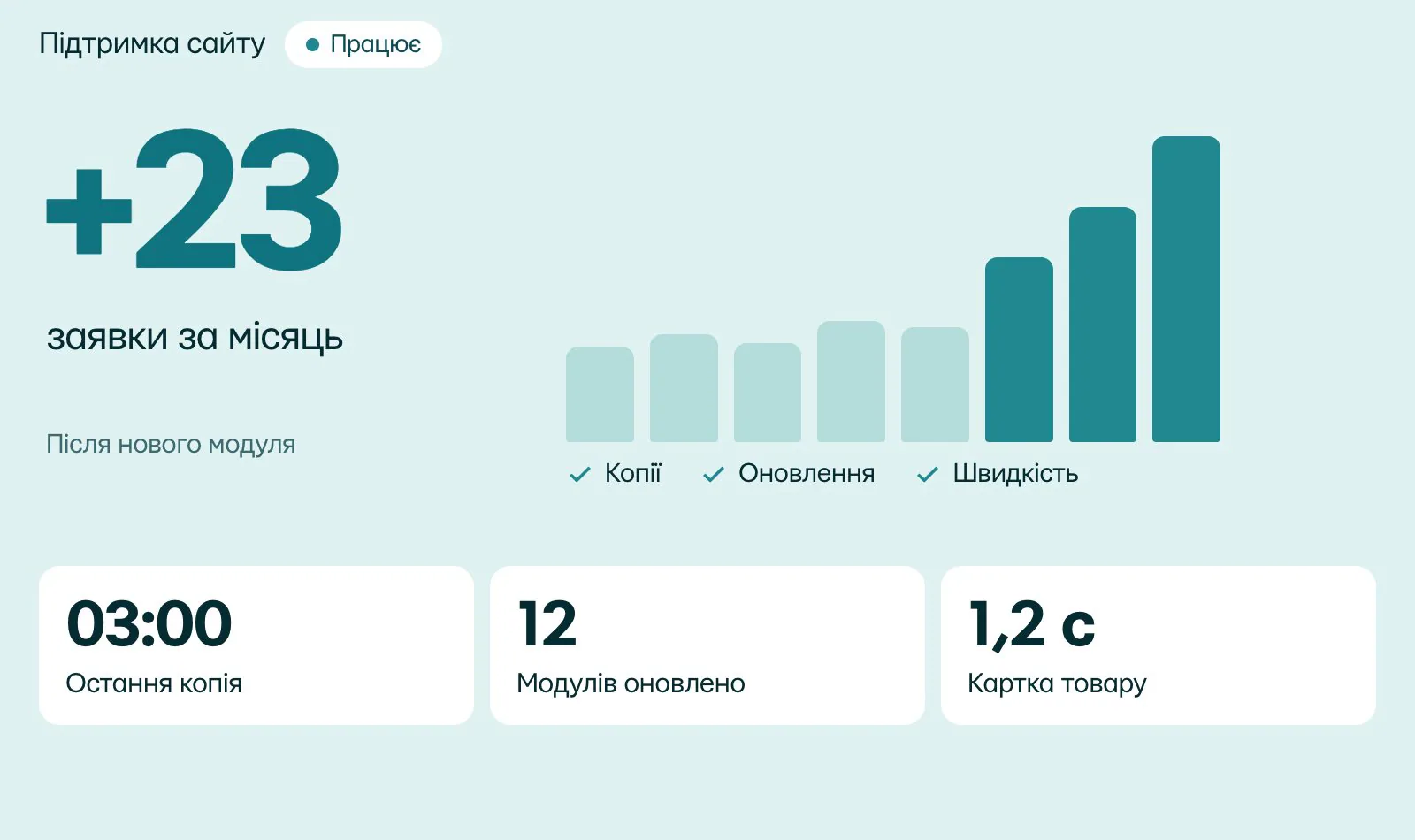
Maintenance: monitoring, backups, updates, a chat with the team. You can go without it: the site, code and access stay with you, and the next team can carry on without us
What’s not included?
Ticket sales for in-person events, seating charts, an event app, networking and a custom webinar room: for these we recommend ready-made services and connect them to the site
Do you use AI?
Yes, in UX analysis and prototypes, supervised by a product designer. It’s written into the contract
How is the work formalized?
A contract with our sole proprietorship (FOP) and invoices. All terms and rates are on the “Cooperation and terms” page
Tell us, what you’re launching and on what date
Two sentences are enough. The person who will run your project replies within one business day
- Next openingStart [month]
Step 1 / 2Tell us about the task, briefly is fineOr straight to Telegram: @ab_ua